
Sustainability
At IBB, we’re working toward a future where sustainability isn’t a separate goal — it’s woven into everything we do. Whether it’s the research happening in our labs, the way we teach and learn, or how we run our day‑to‑day operations, we’re committed to making choices that support a healthier, more resilient world.
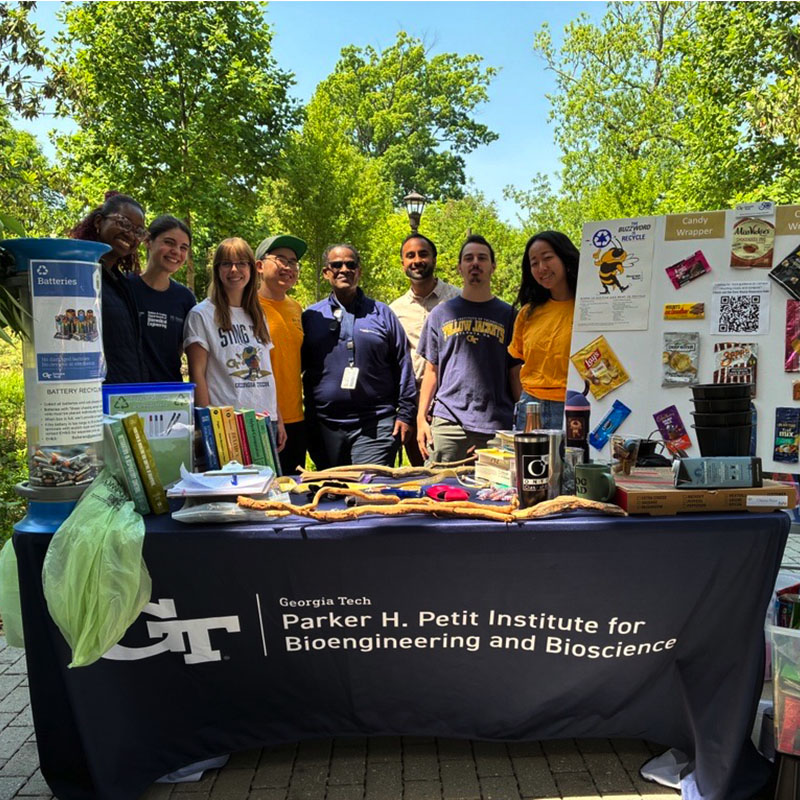
Recycling and Composting
Petit Biotechnology Building
Note that items should be uncontaminated (not exposed to hazardous, volatile, or radioactive materials).
- Aluminum cans and foil – common kitchen areas outside Wing D on each floor
- Batteries – front desk (Room 1101)
- Candy and snack wrappers – front desk (Room 1101)
- Cardboard – outside all research wing doors facing the atrium
- Please collapse the boxes
- CDs — Kendeda building
- Cold packs – front desk (Room 1101)
- Compostable items – common kitchen areas outside Wing D on each floor
- Food scraps, paper towels, pizza boxes, compostable items
- See a full list of compostable items
- Electronics (not purchased with state funds) – Kendeda Building loading dock
- Glass – Basement tunnel next to nitrogen tanks
- All colors; must be washed
- Metal (non-aluminum cans): Steel food cans, metal lids, staples, etc. - see Leonard at front desk (Room 1101)
- Office supplies – front desk (Room 1101)
- Highlighters, markers, pencils, pens, printer cartridges
- Packing peanuts – front desk (Room 1101)
- Note: Most packing peanuts are not recyclable. Plant-based packing peanuts can be composted.
- Plastic Wrap (stretchy, not crinkly) – first floor kitchen by vending machines
- Air pouches, bags, bubble wrap, cling wrap, mailers
- Plastic bottles – common kitchen areas outside Wing D
- Paper – common kitchen areas outside Wing D on each floor
- Office paper, sticky notes, paperbacks
- Paper towels – all restrooms
- Styrofoam – outside all research wing doors facing the atrium
- Please remove packing tape and labels
Energy Efficiency
Shut the Sash
Fume hoods are ventilated enclosures used in laboratories to protect users from fumes and vapors by removing air from the space. These devices are essential for safety, but they also use a lot of energy — a single fume hood can use the same amount of energy in a year as three to four houses!
By closing fume hoods when not in use, you can reduce energy use, increase efficiency, and create a safer lab environment.
Visit the Office of Sustainability's "Shut the Sash" page to learn more about sustainable lab practices.
Waste Reduction for Labs
Pipette tip racks, lids, and cell culture plates packaging recycling — this program enables labs to mail recyclable materials without having to separate paper and plastic, supporting waste reduction.